Meal Prep Lunch Ideas That Last All Work Week
On this page 8
- The separate-and-combine rule
- What actually survives the work week
- The three mistakes that turn lunch into takeout
- Reheating without drying it out
- Prepping lunch for a desk with no microwave
- When Sunday doesn't happen
- Rotating sauces so the same bowl doesn't repeat
- Packing for a shared office fridge
Meal prep lunch ideas need to survive four to five days in the fridge without the rice going hard or the greens wilting, which rules out about half of what looks good in a recipe photo. The ones that actually work separate the parts that store well from the parts that don't, and combine them at lunchtime instead of Sunday.
Six formats built for a full work week:
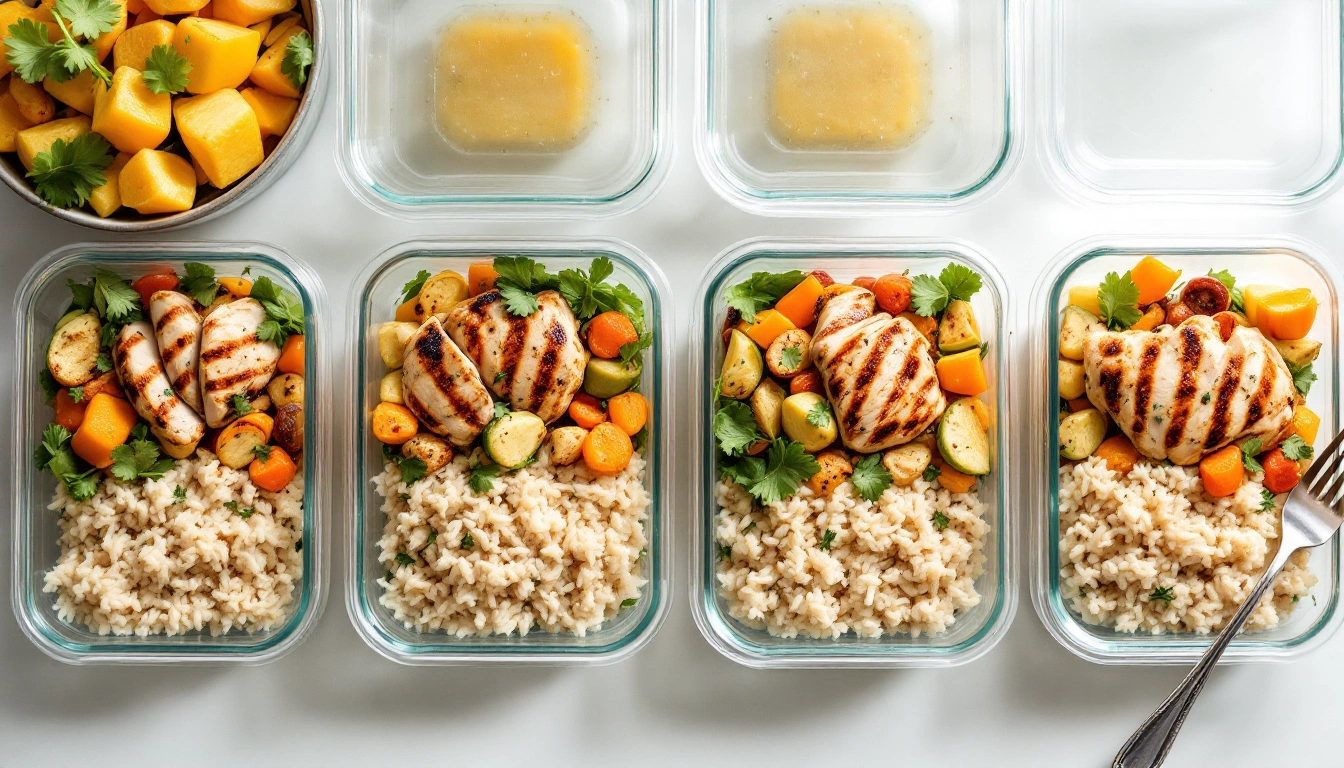
- Grain bowls — rice or quinoa, a protein, roasted vegetables, sauce packed separately. Combine at lunch so nothing goes soggy. Holds five days.
- Mason jar salads — dressing on the bottom, sturdy vegetables next, greens on top. Shake before eating. The layering is what gets you to day five instead of day two.
- Chicken and rice bowls — one protein, one starch, one vegetable, repeated with a different sauce each day so it doesn't feel like the same meal. Four days in the fridge.
- Wraps assembled fresh, filling prepped ahead — cook the protein and chop the vegetables on Sunday, roll the wrap the morning of. The wrap itself doesn't hold up prepped whole.
- Soup in individual containers — freezes and reheats well, and travels without spilling if you use a container with a secure lid.
- Deconstructed taco bowls — seasoned protein, beans, rice, and toppings kept in separate containers, assembled at lunch. Keeps the crunchy parts crunchy.
Pick two or three and rotate the sauce or protein across the week so lunch doesn't repeat exactly.
I put a full week of meals — lunches included, with the grocery list already sorted by aisle — into the free 7-Day High-Protein Plan.
The separate-and-combine rule
Anything with a sauce, a crunchy topping, or leafy greens should be packed apart from the rest and combined right before eating. Combine on Sunday and you've built a soggy lunch that gets worse every day it sits, not better.
What actually survives the work week
Rice and quinoa hold four to five days refrigerated. Roasted vegetables hold about the same. Leafy greens wilt within two to three days even packed separately, so buy a smaller amount and restock midweek rather than prepping a full five days of salad greens on Sunday.
The three mistakes that turn lunch into takeout
- Dressing the whole batch at once. A bowl dressed on Sunday is unpleasant by Wednesday. Pack dressing in small containers and add it at the table.
- One giant container instead of five individual ones. A shared tub means digging through it daily, which flattens the layering that kept the salad or bowl fresh. Portion into individual containers before the week starts.
- Prepping five days of one bowl. Day four of the same lunch is often the day people give up and order out. Two formats beat one.
Reheating without drying it out
Add a splash of water or broth before microwaving rice or grain bowls — dry reheating is the main reason meal-prepped lunches taste worse than the day they were made. Thirty seconds, stir, thirty more.
Prepping lunch for a desk with no microwave
Cold formats — the mason jar salads, wraps, and deconstructed bowls — need nothing but a fork. If a microwave isn't available, build the week around those three and save the grain bowls for days you know you'll have access to one.
When Sunday doesn't happen
Some weeks the prep session gets skipped entirely. Falling back on a rotisserie chicken from the store, a bagged salad kit, and whatever's already in the pantry covers two or three days without starting from zero — not as tidy as a full prep day, but it keeps the week from collapsing into takeout by Tuesday.
Rotating sauces so the same bowl doesn't repeat
The fastest way to get five days out of two or three formats without it feeling repetitive is changing the sauce, not the base. A chicken and rice bowl with a peanut sauce on Monday and the same bowl with a lemon-herb dressing on Wednesday reads as two different meals, even though the prep behind both was identical.
Packing for a shared office fridge
If lunch sits in a communal fridge, labeling containers with a name and day keeps mix-ups to a minimum, and sturdier formats — grain bowls, mason jar salads — handle a bit of jostling better than anything with a delicate top layer. A lunch that survives getting shuffled around a crowded shelf is one less thing to worry about before noon.