Meal Prep Breakfast Ideas Grouped by Pantry Staple
On this page 8
- Why grouping by base beats picking recipes at random
- Mixing bases across a longer stretch
- What to add to hit a higher protein number
- The three mistakes that break the pantry-group method
- Building a shopping list around one base
- When you want to skip the planning entirely
- Combining two bases in the same week without doubling effort
- Using the pantry groups to plan a grocery budget
Meal prep breakfast ideas fall into three pantry groups — egg-based, oat-based, and dairy-based — and the fastest way to plan a week is picking one base and building three or four variations from it, instead of shopping for a different recipe every time.
The three groups, with what to make from each:
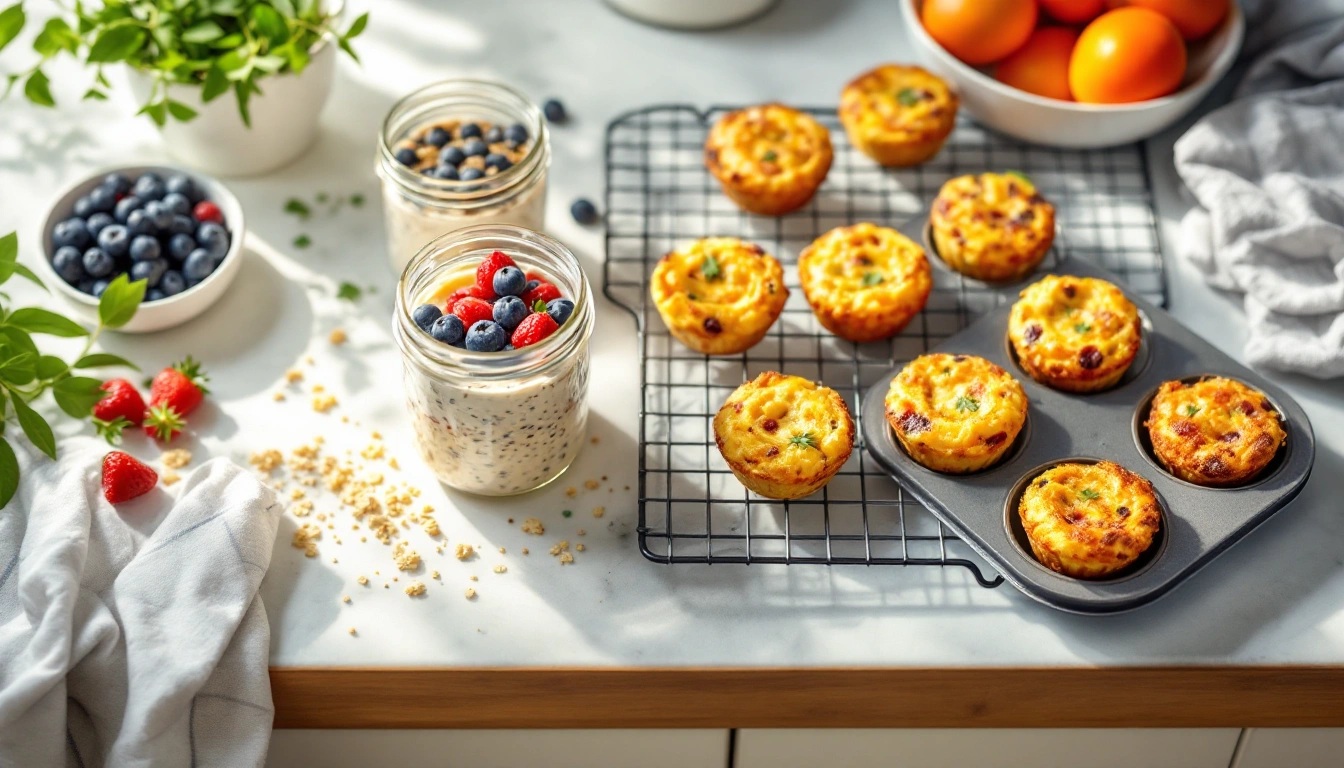
Egg-based: egg muffins with whatever vegetable needs using, a frittata cut into squares, hard-boiled eggs for grab-and-go. All hold four days refrigerated, all deliver 12-20g depending on portion.
Oat-based: overnight oats, baked oatmeal cut into bars, oat and protein powder pancakes made ahead and frozen. Overnight oats hold five days; baked oatmeal and pancakes freeze for a month.
Dairy-based: cottage cheese bowls, Greek yogurt parfaits layered in jars, a yogurt and protein powder bark broken into pieces. No cooking required for any of the three, and all keep three to five days.
Pick one base for the week and make two variations from it — an egg week with muffins and a frittata, an oat week with pancakes and overnight oats. Same shopping list, two different breakfasts.
I put a full week of meals — breakfasts organized the same way, with the grocery list already sorted by aisle — into the free 7-Day High-Protein Plan.
Why grouping by base beats picking recipes at random
Buying ingredients for one base means less waste. A dozen eggs, a bag of oats, or a tub of cottage cheese each cover multiple recipes within their group, so nothing sits half-used in the fridge because a recipe only needed part of it.
Mixing bases across a longer stretch
Two weeks is long enough to rotate through all three without repeating. Egg week, then oat week, then dairy week, then back to eggs — by the time a base comes back around it doesn't feel repetitive.
What to add to hit a higher protein number
Any of the three groups goes from a normal breakfast to a high protein one with the same addition: a scoop of protein powder in oats or yogurt, an extra egg white in the frittata, or a side of cottage cheese next to whichever base you picked. Small additions move a 15g breakfast to 25-30g without changing the format.
The three mistakes that break the pantry-group method
- Buying for three groups at once. Trying to stock eggs, oats, and dairy heavily in the same week usually means something spoils before it gets used. Pick one, buy enough for that, restock the next base the following week.
- Forgetting the freezer options within a group. Baked oatmeal and pancakes both freeze, which means a batch lasts closer to a month instead of four or five days — useful for stretching one prep session across two or three weeks.
- Skipping the vegetable in egg dishes. A plain egg muffin holds less interest by day three than one with spinach, peppers, or onion mixed in. The vegetable doesn't add much protein, but it's what keeps the batch appealing past day one.
Building a shopping list around one base
A single grocery run covering one base — a dozen eggs and a bag of vegetables, or a canister of oats and a bag of frozen fruit — usually costs less than shopping for three separate recipes and having ingredients left over from each.
When you want to skip the planning entirely
Some weeks, picking whichever base has the fewest dishes to wash is a perfectly good way to decide. The point of grouping by pantry staple is to remove decisions, not add a new system to manage.
Combining two bases in the same week without doubling effort
Once the method feels familiar, mixing a small amount of a second base into the week doesn't take much extra work — a few overnight oat jars alongside a full batch of egg muffins, for instance. The rule is still one dominant base per week, with a smaller second batch added in for variety, rather than shopping for and prepping three full bases at once.
Using the pantry groups to plan a grocery budget
Since each group centers on one or two core ingredients — a dozen eggs, a bag of oats, a few tubs of dairy — it's easier to estimate the week's breakfast cost before shopping. Knowing that an egg week costs roughly the price of a dozen eggs and a bag of vegetables, while an oat week costs closer to the price of a canister of oats and some fruit, makes meal prep breakfast ideas simpler to plan around a set budget.