Lunch Meal Prep for the Week, Day by Day
On this page 8
- Why splitting into two sessions beats one big batch
- What holds from Sunday to Friday
- Building the map around your actual week
- The mistake that collapses the whole week
- Portioning so the week runs itself
- Adjusting the map for a shorter or longer week
- Labeling containers so nothing gets skipped
- What to do with the odds and ends
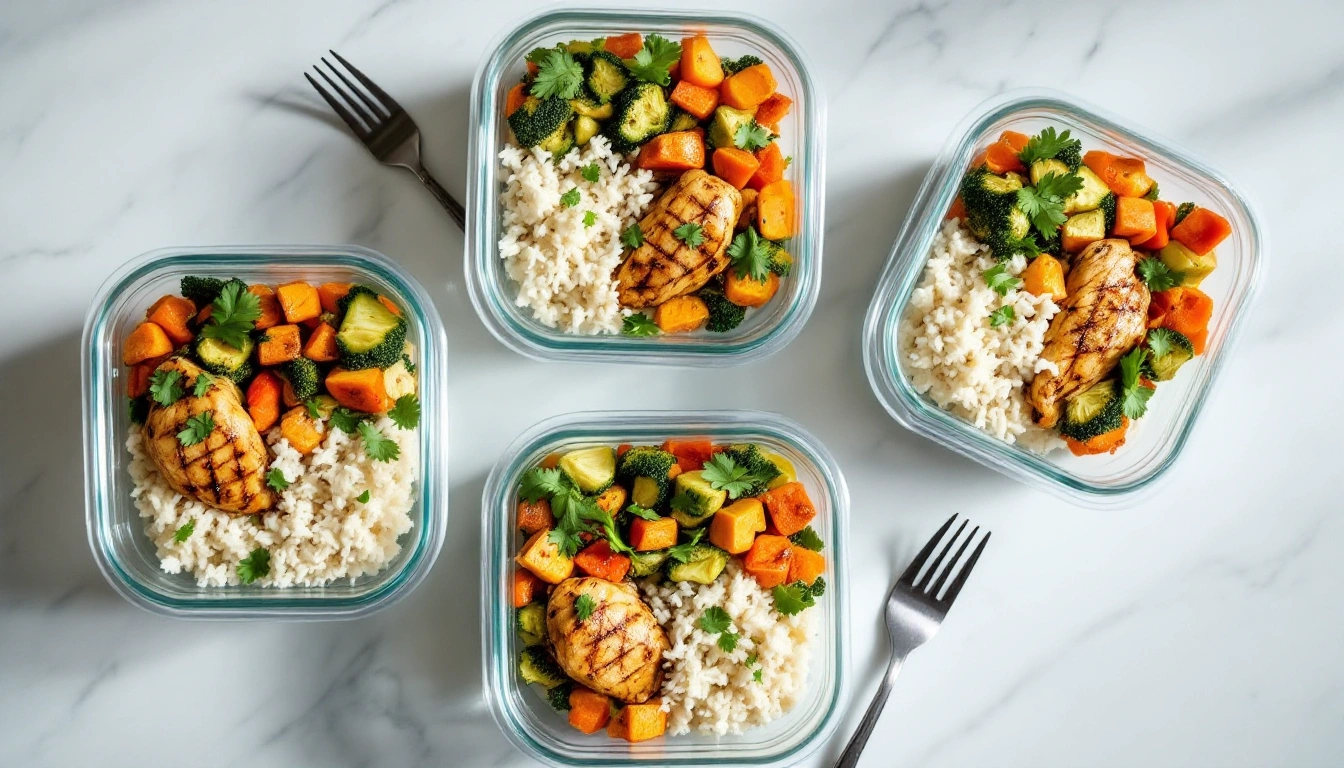
Lunch meal prep for the week works best mapped out day by day rather than cooked as one identical batch. Here's a five-day version built from two cooking sessions instead of five.
Sunday, session one (30 minutes): roast a tray of chicken thighs and a tray of vegetables. Cook a pot of rice or quinoa alongside.
- Monday: chicken, rice, and vegetables with a squeeze of lemon.
- Tuesday: the same chicken shredded into a wrap with hummus.
- Wednesday: chicken and rice with a peanut-lime sauce made fresh that morning.
Wednesday evening, session two (15 minutes): a quick batch of tuna or egg salad for the back half of the week, since the chicken batch is running low by now anyway.
- Thursday: tuna salad on greens with the last of the roasted vegetables.
- Friday: whatever's left, combined into one bowl — the cleanup lunch that uses up odds and ends before the weekend.
Two sessions, five different lunches, and nothing sits in the fridge long enough to go stale.
The free 7-Day High-Protein Plan lays out a full week like this one, lunch through dinner, with the grocery list built in.
Why splitting into two sessions beats one big batch
Cooking all five lunches on Sunday means the day five lunch has been sitting for five straight days, using up most of its safe fridge window before you even eat it. A second short session midweek keeps every lunch within a shorter, fresher window and adds variety without much extra time — 15 minutes on a Wednesday evening.
What holds from Sunday to Friday
Cooked chicken holds the standard 3-4 days in the fridge — check your own kitchen if it's been sitting somewhere warm. That's why the plan above shifts to a fresh batch by Wednesday rather than stretching the same chicken through Friday. Rice and roasted vegetables hold slightly longer, four days, and reheat fine alongside a fresh protein.
Building the map around your actual week
The Monday-through-Friday split above assumes a standard week, but the structure holds for any schedule — cook the first batch the night before your first workday, and plan a second short session around the midpoint. What matters is that no single portion sits longer than four days before it's eaten.
The mistake that collapses the whole week
Prepping all five lunches identically in one sitting so they're technically done, then finding day four and five unappetizing because nothing changed all week. A five-minute midweek session — a new sauce, a different format, a fresh batch of one component — costs less time than it seems and is the difference between finishing the week's lunches and ordering out on Thursday.
Portioning so the week runs itself
Container each lunch the moment it's made, not the morning you eat it. A shared tub in the fridge means someone has to remember to portion it out each day, and that's the step mornings don't have time for. Individual containers turn "make lunch" into "grab a container," which is most of what makes a mapped-out week actually work.
Adjusting the map for a shorter or longer week
A four-day work week just drops Friday from the map above and stretches the Wednesday session's batch across Thursday only, rather than Thursday and Friday both. A six-day week adds one more lunch from the Wednesday batch or a third short session over the weekend — the two-session structure scales either direction without needing to be rebuilt from scratch.
Labeling containers so nothing gets skipped
A strip of masking tape with the day written on it takes ten seconds per container and solves the most common reason lunch prep falls apart: reaching for whatever's in front, eating Monday's lunch on Wednesday, and leaving Wednesday's to go past its window. Labeling by day, not by contents, keeps the order intact even when the fridge gets shuffled around.
What to do with the odds and ends
The Friday "cleanup lunch" above exists on purpose — a small scoop of rice here, a few pieces of chicken there, combined into one bowl instead of thrown out individually. Building that step into the map from the start means less food wasted and one less thing to decide on a Friday when the week's already winding down.