High Protein Overnight Oats: 5 Formulas Over 25g
On this page 7
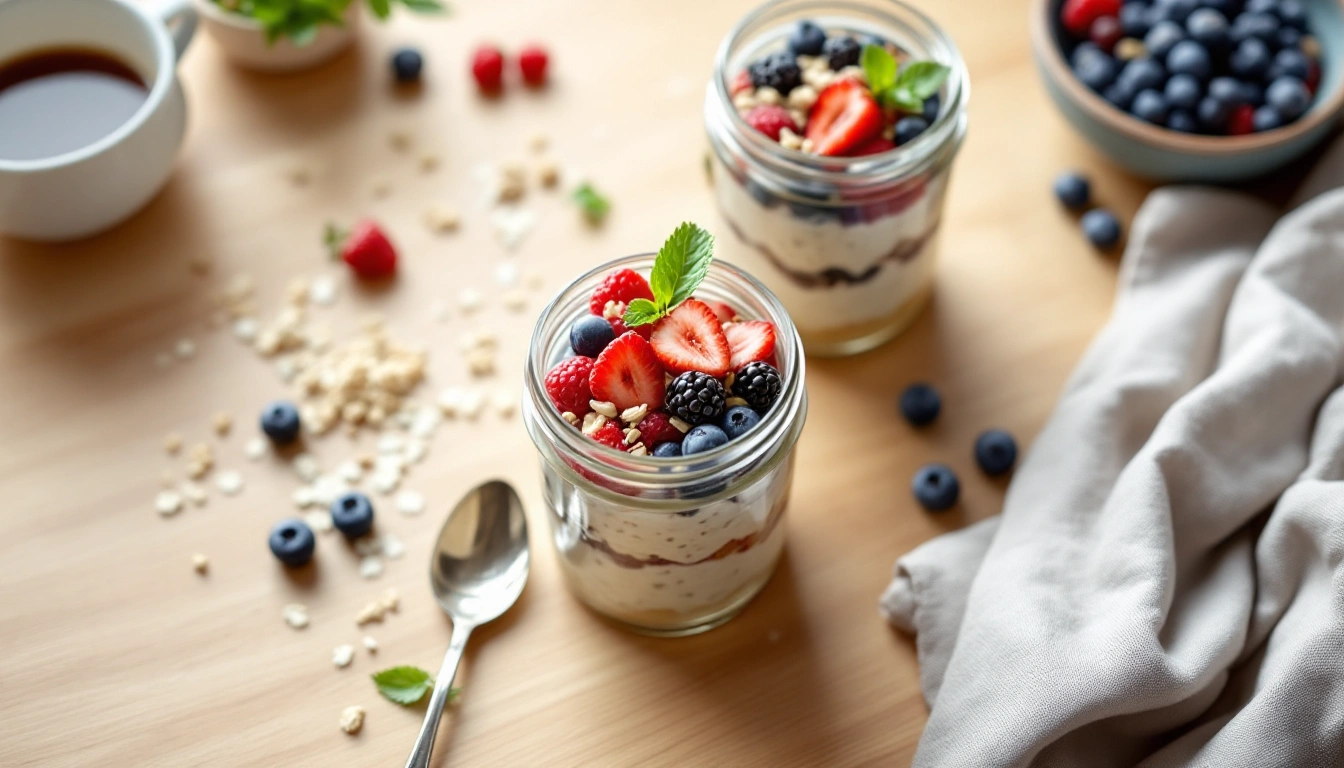
High protein overnight oats land at 25-35g of protein a jar when you build them off a base of Greek yogurt or protein powder instead of oats and milk alone. Plain oats and milk only carry about 10g, which is why most overnight oats recipes fall short of what "high protein" actually means.
Five ratios that hold the texture and clear the number:
- Greek yogurt base — half a cup of oats, three-quarters of a cup of plain Greek yogurt, a quarter cup of milk. About 30-33g. The yogurt does most of the work.
- Protein powder base — half a cup of oats, one scoop of whey or casein, three-quarters of a cup of milk. Around 28-32g, and it sets up thicker than the yogurt version.
- Cottage cheese blended in — half a cup of oats, half a cup of cottage cheese blended smooth, a splash of milk. About 27g, with a texture close to a pudding rather than grainy oats.
- Yogurt plus powder, split dose — half a cup of oats, half a cup of Greek yogurt, half a scoop of protein powder. Roughly 35g, the highest of the five, and still balanced in flavor.
- Egg white stir-in — half a cup of oats, a quarter cup of pasteurized egg whites stirred in before the fridge, three-quarters cup of milk. About 24g. This one sounds odd but the eggs cook slightly overnight from the acid in the fruit you add and disappear into the texture.
I put a full week of high protein overnight oats — five flavor combinations plus the rest of the week's meals — into the free 7-Day High-Protein Plan.
Getting the texture right
The ratio that goes wrong most often is too much liquid. Oats need roughly equal parts oats to liquid, with the yogurt or cottage cheese counted as part of that liquid. Add all your dairy first, then top up with milk only if the mix looks stiffer than pudding — it thickens more overnight than it looks like it will in the jar.
Chia seeds, a tablespoon per jar, help protein-heavy versions set instead of staying loose, especially the protein powder base which can turn gluey without them.
How long these actually hold
Overnight oats keep for about five days in a sealed jar in the fridge — a day or two longer than most cooked breakfasts, since nothing here gets heated. Add fresh fruit the morning you eat it rather than mixing it in on prep day; berries go soft and bananas brown by day three otherwise.
Flavor combinations that don't fight the protein
- Yogurt base + frozen berries + a spoon of peanut butter
- Powder base (chocolate) + banana + cocoa powder
- Cottage cheese base + cinnamon + diced apple
- Yogurt base + pumpkin puree + pumpkin spice
- Egg white base + vanilla extract + sliced strawberries
The two mistakes that quietly drop the protein number
- Flavored yogurt instead of plain. Swapping plain Greek for a vanilla or fruit-on-the-bottom tub can cut the protein by a third and double the sugar. Buy plain, sweeten it yourself.
- Skim or oat milk as the only liquid. Oat milk carries almost no protein — about 1g a cup. If dairy milk isn't an option, use unsweetened soy milk instead; it's the only common plant milk that comes close to dairy's protein count.
Prepping five jars at once
Line up five jars, add the dry oats to each, then work through one wet-ingredient batch at a time — all the yogurt jars first, then the powder jars — instead of building each jar start to finish. It's faster and you're less likely to lose count of what went in which one.
Portion size matters more here than in most recipes
A "serving" of overnight oats varies a lot by jar size. Measure the oats and liquid with the same cup each time rather than eyeballing it, since a jar that looks full but only has a third of a cup of oats in it will land well under the protein numbers above.
Making these dairy-free
Swap plain Greek yogurt for a plain, unsweetened soy yogurt — soy is the only common dairy-free yogurt that gets close to the same protein count, most others land under 5g a cup. For the milk, unsweetened soy milk carries 7-8g of protein a cup, close enough to dairy milk that the ratios above don't need adjusting. Oat milk and almond milk don't work as substitutes here; both carry only a gram or two of protein a cup and will quietly drop every recipe above below its stated number.