High Protein Lunch Ideas Built for the Workday
On this page 6
A high protein lunch built for the workday needs two things a dinner doesn't: it has to travel without spilling, and it has to taste good cold or after a quick microwave. Five that clear 35g and survive both:
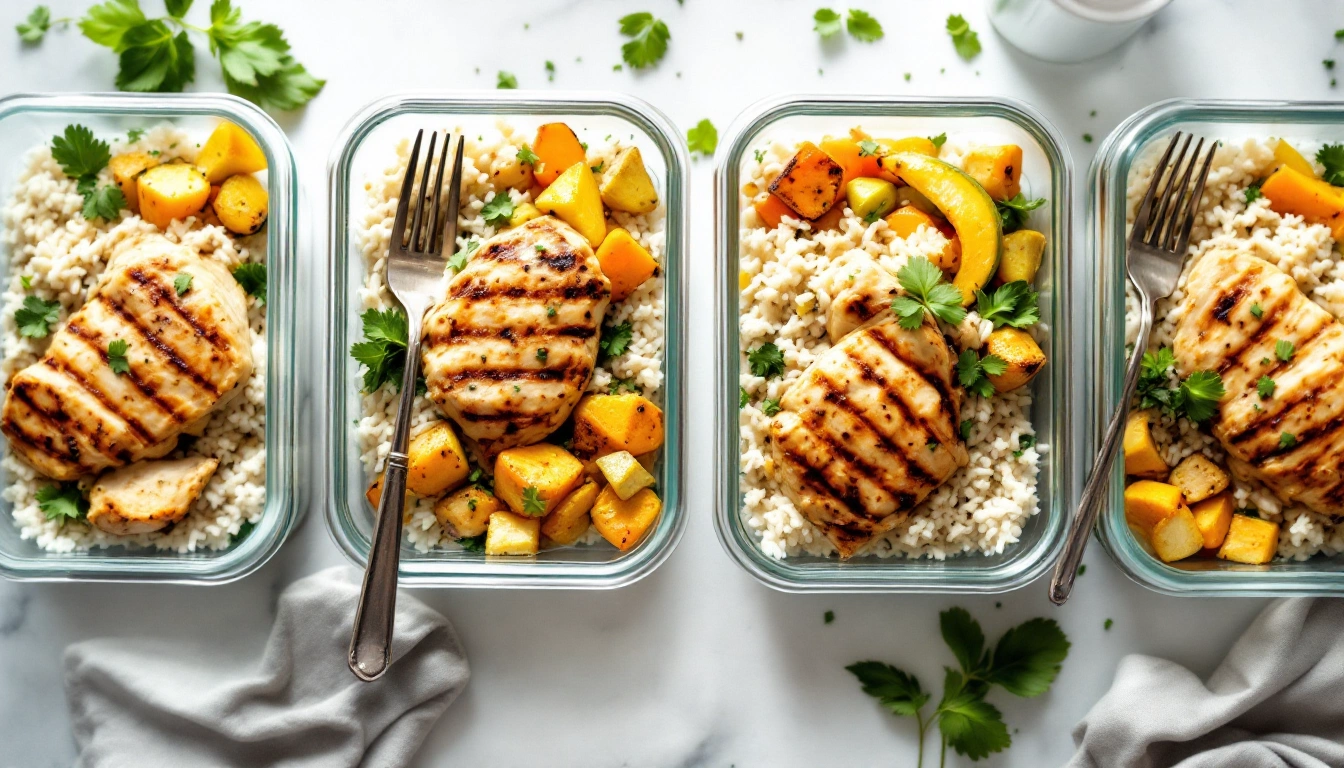
- Chicken and rice bowls — 5-6 ounces of chicken is 35-40g. Pack the sauce separately so the rice doesn't go soggy by noon.
- Turkey and hummus wraps — a whole wheat wrap, 4 ounces of deli turkey, hummus, and spinach. About 28g; add a hard-boiled egg on the side to clear 35g.
- Tuna salad with crackers — a 5-ounce pouch of tuna mixed with Greek yogurt instead of mayo is 30g, closer to 40g with a side of cottage cheese.
- Cottage cheese and fruit bowls — a cup of cottage cheese is 25-28g on its own; add nuts to close the gap to 35g without cooking anything.
- Leftover dinner, reheated — the simplest option. Cooking extra portions at dinner and packing the leftover the same night is faster than any dedicated lunch recipe.
Pack two of these on Sunday night and lunch stops being a decision made at 11:45am with whatever's left in the fridge.
The full week — lunch included, plus breakfast and dinner and the grocery list — is in the free 7-Day High-Protein Plan.
Packing for a desk versus a cooler bag
A desk lunch needs to survive room temperature for a couple hours before there's a fridge to put it in — cold packs or an insulated bag matter more than the recipe itself. A cooler bag in a car has the same problem in reverse during summer. Either way, mayo and dairy-heavy dressings are the first things to go warm and unsafe; Greek yogurt swaps in for mayo in most recipes with barely a taste difference.
Reheating in an office kitchen
Rice and grain bowls reheat fine in a shared microwave, but strong smells (fish, some curries) are worth skipping if the kitchen is small and shared. Wraps and cold options sidestep the microwave line entirely, which matters more on days the kitchen is packed at noon.
How long a packed high protein lunch actually holds
Chicken, turkey, and other cooked meats are good for 3-4 days from when they were cooked, not from when they're packed — check your own kitchen past that point. Tuna and egg salads are best within 2-3 days. Cottage cheese and yogurt hold as long as the container's date.
The mistake that shrinks the protein number by lunchtime
Packing the protein and the sauce together in the morning. Sauce sitting on protein for six hours in a bag changes the texture more than most people expect, especially with anything creamy. Packing sauce in a small separate container and adding it right before eating keeps the texture — and the appetite for eating the whole thing — intact.
Building a lunch that doesn't repeat the dinner rotation
If dinner this week is chicken and rice, lunch doesn't have to be. Rotating a different protein — tuna, turkey, cottage cheese — into lunch keeps the week from feeling like the same three meals eaten twice a day, and it spreads the grocery budget across more affordable protein sources instead of buying six pounds of one thing.
Prepping lunch alongside dinner instead of separately
The fastest way to cover a week of high protein lunch is to stop treating it as a separate cook session. Doubling the protein portion at dinner — one more chicken breast on the pan, an extra scoop of ground turkey in the pot — costs almost no additional time and turns tonight's dinner into tomorrow's lunch automatically. This is usually faster than any dedicated lunch recipe, because the cooking already happened.
Where this breaks down is variety: five days of the same dinner-as-lunch gets old by Wednesday. Mixing in one or two of the dedicated lunch options above, alongside three days of doubled dinner portions, keeps the week from feeling repetitive while still cutting the total cooking time roughly in half compared with planning breakfast, lunch, and dinner as three fully separate categories.
A high protein lunch built this way also tends to cost less than a dedicated lunch recipe, since the extra portion is riding on ingredients already bought for dinner rather than a second, separate grocery list.