High Protein Chicken Recipes That Reheat Well
On this page 7
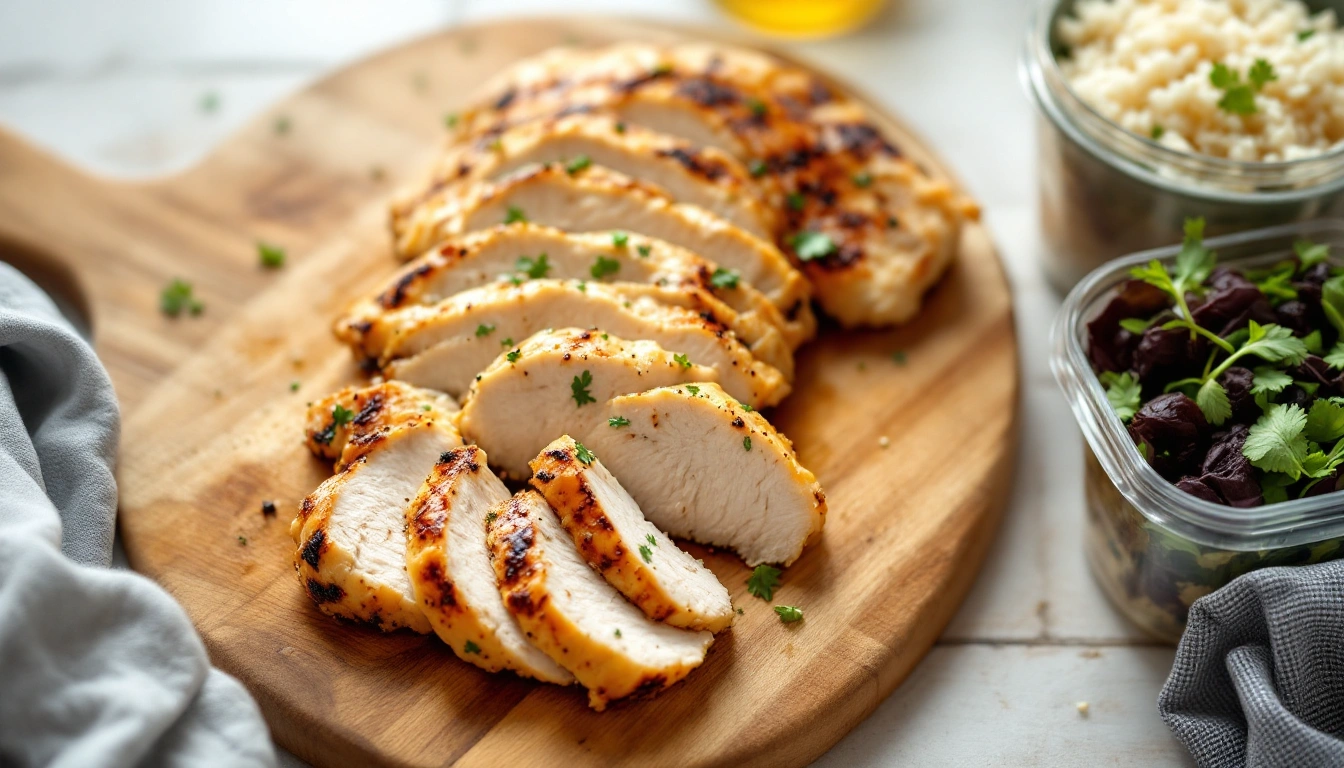
High protein chicken recipes work for meal prep when they reheat without drying out, which rules out a lot of pan-seared breast recipes that are great fresh and rubbery by Wednesday. Six recipes built to hold up, each landing 30g or more per serving.
- Sheet pan chicken thighs with vegetables — bone-in or boneless thighs, roasted with broccoli and carrots at 400°F for 30-35 minutes. About 34g protein. Thighs stay moist on reheat far better than breast.
- Shredded chicken and rice bowls — chicken breast simmered in broth until it shreds easily, served over rice with salsa. Around 32g protein, and the broth keeps it from drying out.
- Chicken and black bean burrito bowls — grilled or baked chicken, black beans, corn, rice. About 36g protein.
- Buffalo chicken lettuce wraps — shredded chicken tossed in buffalo sauce, wrapped fresh at lunchtime rather than prepped soggy. Roughly 30g protein.
- Chicken and vegetable soup — shredded chicken, carrots, celery, egg noodles or rice. About 28g protein, and soup reheats better than almost anything else on this list.
- Baked chicken parmesan, sauce on the side — breaded or plain baked chicken breast, marinara kept separate until serving so the coating doesn't go soggy in the fridge. About 38g protein.
I put a full week of high protein chicken recipes — these plus the rest of the week's meals and a grocery list sorted by aisle — into the free 7-Day High-Protein Plan.
Thighs vs. breast for meal prep specifically
Chicken breast has a slight protein edge per ounce, but thighs reheat better because the extra fat keeps them from drying out in the microwave. For meal prep specifically — food that sits four days and gets reheated once — thighs are usually the better call even though breast gets more attention in most recipes.
Cooking once, three ways
Roast or poach a large batch of chicken plain, with just salt and pepper, then split it three ways: some shredded into soup or bowls, some cubed into a burrito bowl, some left whole for a sandwich or wrap. One cooking session, three different high protein chicken recipes for the week, without cooking chicken three separate times.
Keeping it from drying out on reheat
Add a splash of broth or water before microwaving, and cover the container loosely rather than sealing it tight. Thirty seconds, then check, rather than one long blast — chicken that's slightly cool in the middle beats chicken that's rubbery all the way through.
How long chicken holds
Cooked chicken keeps 3-4 days in the fridge — check your own kitchen and use your judgment on anything past that window. Shredded chicken in broth or sauce tends to hold moisture a day or so longer than dry cubed chicken. Freeze extra portions for up to a couple of months; it thaws fine for soups and bowls, less well for anything meant to be crispy.
Three mistakes that dry out a whole batch
- Overcooking to "be safe." Chicken is done at 165°F internal — a meat thermometer is worth the five dollars if you're consistently ending up with dry batches. Guessing tends to run hot.
- Cooking breast at high heat with no liquid. A dry sheet pan at 425°F for 40 minutes is how breast turns to cardboard. Lower heat, shorter time, or add broth for anything that'll be reheated later.
- Skipping the sauce or broth on prep day. Chicken cooked and stored completely dry loses more moisture in the fridge than chicken stored with even a small amount of sauce or broth around it.
Rotating recipes so the week doesn't repeat
Two chicken recipes a week, not one, keeps things from getting old by Thursday. Pair one dry-cooked option — sheet pan or grilled — with one wet option — soup or a sauced bowl — and the reheats stay distinct even though the base protein is the same.
Starting from frozen chicken
Forgetting to thaw chicken doesn't have to derail prep day. Frozen chicken breasts or thighs can go straight into the oven or a pot of simmering broth — add roughly 50% more cook time and check with a thermometer rather than guessing, since frozen cuts cook unevenly at the edges. What doesn't work well from frozen is the sheet pan method: frozen chicken releases water that steams the vegetables next to it instead of letting them roast. Simmer-and-shred or a covered bake handle frozen chicken better than anything that needs a dry, hot pan.