High Protein Breakfast: 6 You Can Prep on Sunday
On this page 6
A high protein breakfast means 25-40g before you leave the house. That's the number that actually holds until lunch. Most breakfasts people call healthy land around 8-12g, which is why you're hungry again at 10am.
Six formats that hit the number and survive four days in the fridge:
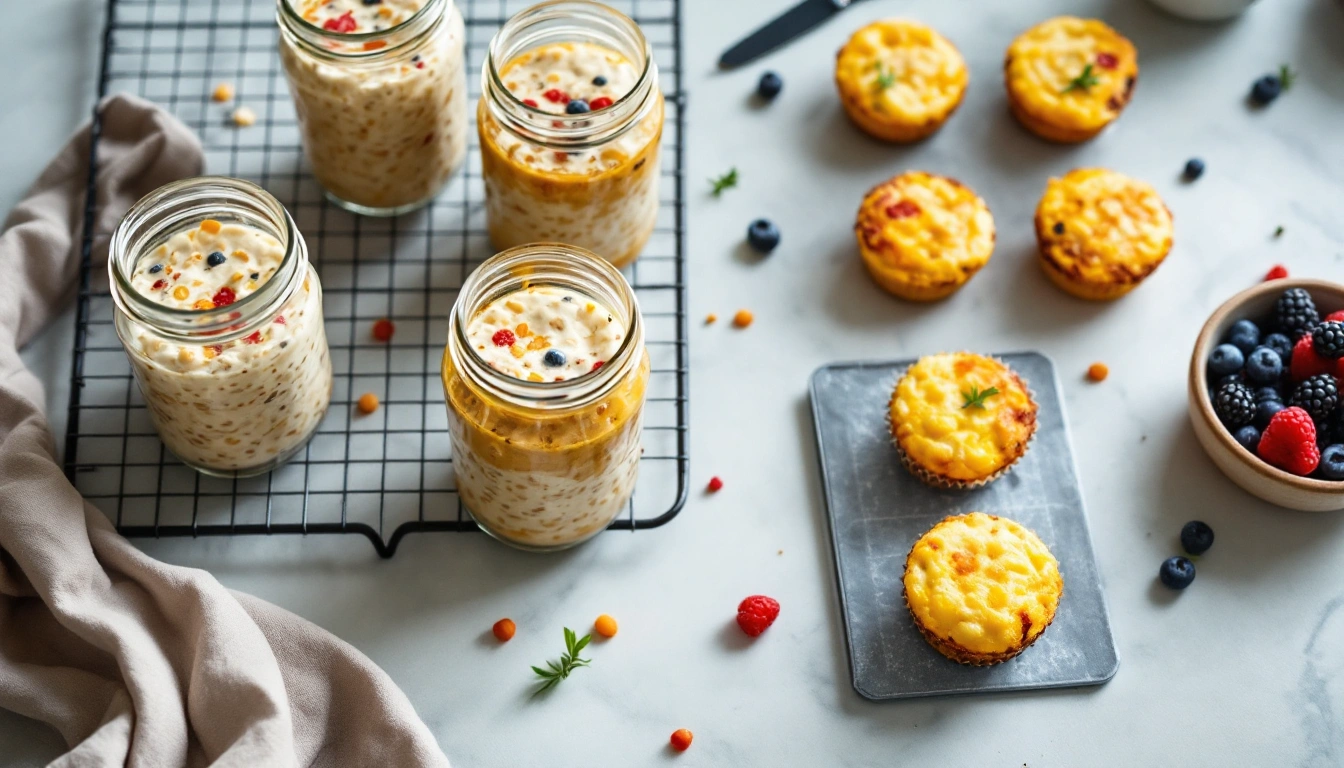
- Egg bites — 12 eggs, a cup of cottage cheese, whatever vegetables need using. Bake in a muffin tin at 350°F for about 20 minutes. Three bites is roughly 22g, four is closer to 30g.
- Overnight oats with Greek yogurt — half a cup of oats, three-quarters of a cup of plain Greek yogurt, a scoop of protein powder. Around 35g, and you never turn on the stove.
- Breakfast burritos — scrambled eggs, black beans, a little cheese, wrapped and frozen. Roughly 28g each. They microwave from frozen in two minutes.
- Cottage cheese bowls — a cup of cottage cheese is about 25g on its own. Fruit and nuts on top, assembled in the time it takes to find a spoon.
- Breakfast sandwiches — egg, cheese, a slice of ham or turkey on an English muffin. About 25g. Wrap in foil, freeze, reheat in a toaster oven.
- Protein baked oatmeal — one pan, cut into six squares. Around 20g a square, and it's the cheapest per serving of the six.
Pick two, not six. Making two formats on Sunday gives you variety without a four-hour prep day, and you'll actually eat both.
I put the full week — these breakfasts plus lunches and dinners, with the grocery list already sorted by aisle — in the free 7-Day High-Protein Plan.
Hitting the number without doing math every morning
Protein per serving is easier to control if you anchor each breakfast on one main source and treat everything else as extra.
Rough numbers worth memorising: one large egg is 6g. A cup of plain Greek yogurt is 20-23g. A cup of cottage cheese is 24-28g. A scoop of whey is 20-25g. A slice of deli turkey is 5g.
So two eggs and a slice of cheese is 16g — that's a snack, not a high protein breakfast. Two eggs, a slice of cheese, and a cup of cottage cheese on the side is 42g. Same effort, completely different morning.
What actually keeps in the fridge
Four days is the honest limit for cooked egg dishes. Overnight oats hold five. Anything with avocado in it is a one-day item, so add that fresh.
Egg bites go rubbery if you microwave them from cold at full power. Thirty seconds at half power, then ten more if needed. It's a small thing that decides whether you finish the batch or throw half of it out on Thursday.
Freeze what you won't reach by day four. Burritos and sandwiches freeze well for a month; oats and cottage cheese don't freeze at all.
The three mistakes that cost you the most protein
- Fruit-heavy smoothies. A smoothie with banana, berries, juice and a spoon of peanut butter is maybe 8g. Add yogurt or a scoop of powder and it's 30g. The base matters more than anything you put on top.
- Flavoured yogurt. Swapping plain Greek for a flavoured tub can halve the protein and double the sugar. Buy plain, add your own fruit.
- Prepping seven days of one thing. Day five of the same egg bite is the day the whole habit quietly ends. Two formats, three or four days each.
If mornings are genuinely chaotic
Build the grab-and-go version. Cottage cheese bowls and overnight oats need zero heat, zero plate, and can be eaten in a car or at a desk. Portion them into individual containers on Sunday rather than into one big tub — a tub means you serve yourself, and serving yourself at 7am means you under-serve.
Keep one shelf-stable backup in a bag or a desk drawer for the mornings that get away from you. A protein bar isn't as good as a real high protein breakfast, but 20g eaten beats 35g left in the fridge.
Prepping for two people with different appetites
Cook one base, portion differently. The same tray of egg bites covers a 25g breakfast and a 40g breakfast — it's three bites versus five. Don't run two separate preps; run one and split it at the container stage.
If one of you eats dairy and the other doesn't, the burritos and egg bites both work without cheese, and the protein loss is only about 5g.
When you don't want to cook at all this week
Some weeks the prep day doesn't happen. A prepared-meal service with high-protein breakfast options covers the gap without pretending you'll get to it on Wednesday, and it's worth knowing the cost per serving before you need it rather than deciding at 9pm on a Sunday.
A silicone muffin tray and a set of leakproof glass containers is most of the equipment any of these six need. Glass matters more than it sounds — egg dishes pick up plastic smells fast, and that's the other reason batches get abandoned by Thursday.