Healthy Lunch Meal Prep: 6 Balanced Options
On this page 7
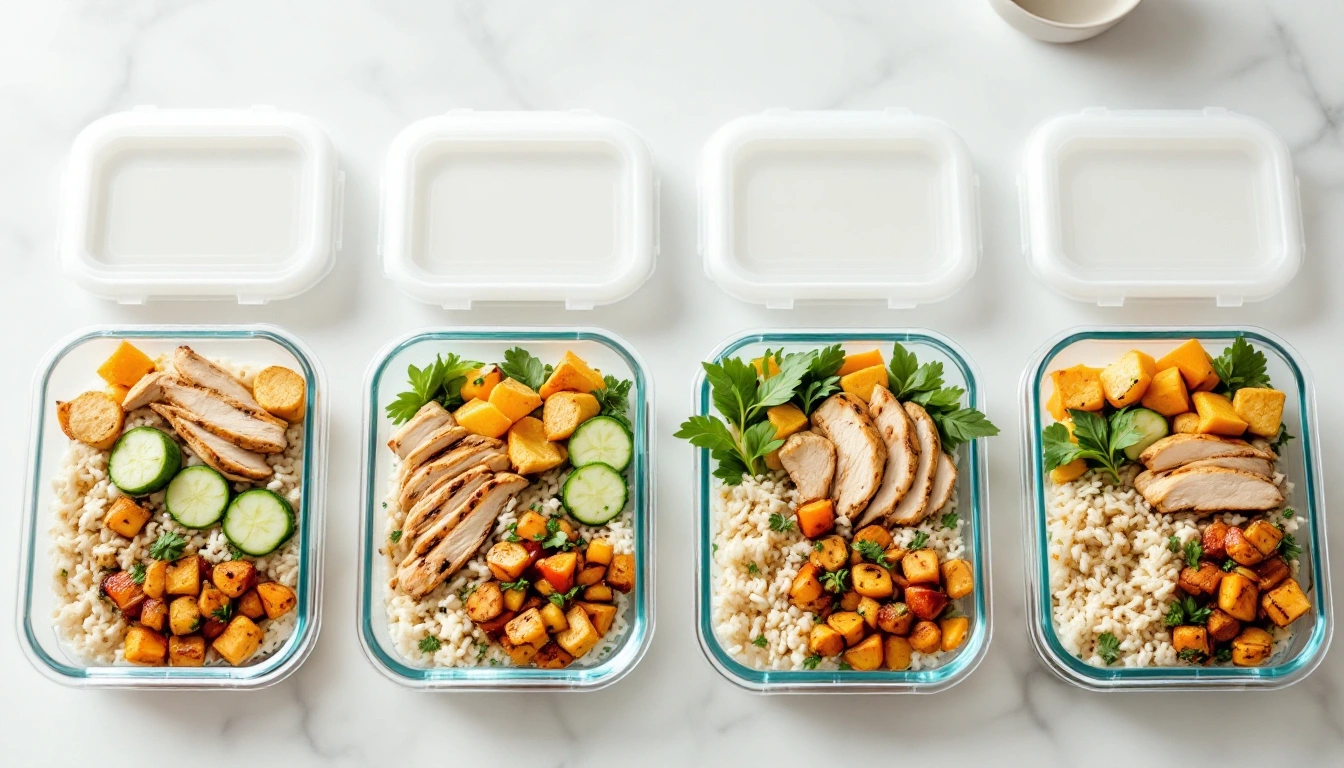
Healthy lunch meal prep means a protein source, a fiber source, and at least one vegetable in the same container — not just a salad with lettuce as the only vegetable and nothing to make it filling. Six lunches that hit all three:
- Chicken and quinoa bowls — grilled chicken, quinoa, roasted peppers, a lemon vinaigrette. About 35g protein, 6g fiber.
- Turkey chili — ground turkey, kidney beans, tomatoes, onion. Around 30g protein, 9g fiber, and it reheats better than most lunches.
- Chickpea and tuna salad — canned tuna, chickpeas, cucumber, olive oil. About 32g protein, 8g fiber, no cooking required.
- Egg and veggie fried rice — eggs, brown rice, frozen peas and carrots, soy sauce. Roughly 22g protein, 5g fiber, and it uses up rice that's a day or two old best anyway.
- Lentil and vegetable soup — lentils, carrots, celery, vegetable broth. About 18g protein, 12g fiber, the highest-fiber option here.
- Salmon and roasted broccoli — salmon fillet, broccoli, sweet potato. Around 34g protein, 7g fiber.
I put a full week of healthy lunch meal prep — six lunches plus breakfast and dinner, with the grocery list sorted by aisle — into the free 7-Day High-Protein Plan.
Why fiber matters here as much as protein
A lot of meal prep advice stops at protein and treats vegetables as a garnish. Fiber is what makes a lunch actually hold you until dinner — protein alone digests faster than protein paired with fiber-rich carbs and vegetables. Aim for at least 6-8g of fiber per lunch, which most of the six above clear without trying.
Building your own combination
Pick one protein (4-6 oz cooked chicken, turkey, tofu, or fish), one fiber source (a cup of beans, lentils, or a whole grain like quinoa or brown rice), and one vegetable (a cup, roasted or raw). That's the whole formula. Sauce and seasoning are what keep five days of the same structure from tasting like the same meal.
How long these hold
Grain- and bean-based lunches keep for 4-5 days in the fridge. Anything with cooked chicken, turkey, or fish is closer to 3-4 days — check your own kitchen and trust your nose before day four. Soups and chili actually improve after a day or two as the flavors settle, and they freeze well for up to three months if you make a double batch.
The container matters more than the recipe
Healthy lunch meal prep falls apart fastest when the container is wrong, not when the recipe is bad. Soups need a container that won't leak in a bag. Salads with dressing need the dressing separate until you eat, or the greens go soft by day two. Bowls with rice or quinoa reheat fine in almost anything.
Three mistakes that make lunches boring by Thursday
- Making one giant batch of the exact same bowl. Cook two different proteins and rotate the vegetable or sauce across the week instead of eating the identical bowl five days running.
- Skipping the sauce. A lunch with no dressing, salsa, or sauce tastes like cardboard by day three even if the ingredients were fine on day one. Make a simple vinaigrette or keep a bottled one on hand.
- Forgetting the reheat test. Some vegetables — broccoli, green beans — go mushy after a few days of reheating. Roast them slightly under-done on prep day so they hold up better through the week.
When lunch prep isn't happening this week
Some weeks the Sunday batch-cook doesn't come together, and that's fine — a shelf-stable backup like canned tuna and a pouch of pre-cooked lentils covers one or two lunches without derailing the rest of the plan.
What these actually cost per lunch
Protein is the line item that swings the price most. Canned tuna and dried or canned chickpeas sit on the cheaper end — a full batch of the chickpea and tuna salad usually costs a few dollars a serving. Salmon is the priciest of the six, closer to double the cost of the chicken or turkey options per serving. Lentil and vegetable soup is the cheapest overall, since lentils cost a fraction of any meat per gram of protein, which is part of why it's worth keeping in rotation on a tight grocery week. Buying chicken thighs instead of breast, and dried beans instead of canned, cuts cost further without changing the protein number by much.