Healthy Lunch Ideas for Work That Travel Well
On this page 6
Healthy lunch ideas for work need to solve two problems the average recipe ignores: a commute in a bag, and a kitchen you don't control once you get there. These five hold up through both.
- Mason jar salads — dressing on the bottom, sturdy vegetables next, greens on top, sealed for up to five days. Shake it into a bowl at your desk. No microwave, no soggy leaves.
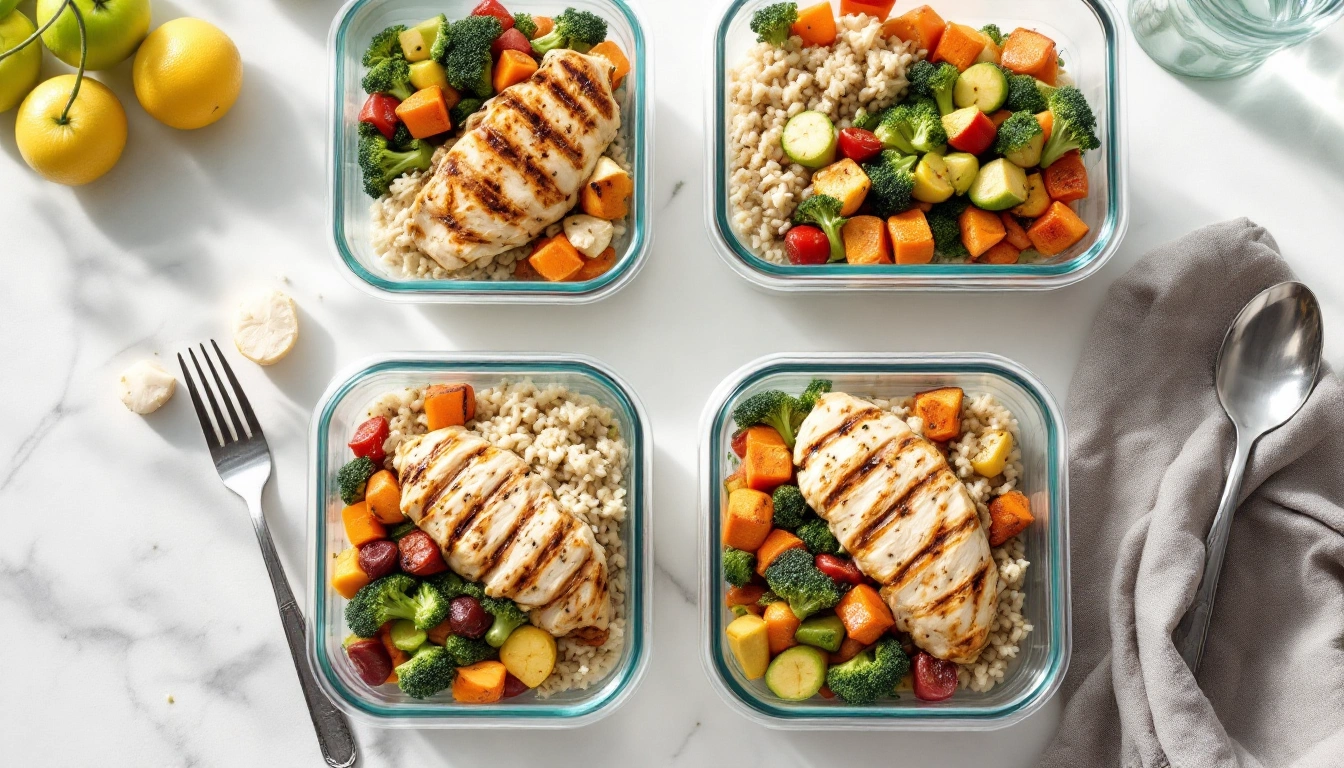
- Grain bowls — cooked quinoa or rice, a protein, and roasted vegetables in one container. Eat cold or give it 90 seconds if there's a microwave.
- Wraps built the night before — hummus as the moisture barrier against the tortilla, protein and vegetables layered in, wrapped tight in foil. Holds until midday without going soggy.
- Soup in a thermos — a good thermos keeps soup hot for four to five hours, which means you can make it Sunday and not touch a microwave all week.
- Bento-style boxes — protein, a starch, and raw vegetables in separate compartments, nothing touching. Works cold, which makes it the easiest of the five when there's no kitchen at all.
Two or three of these on rotation cover a full work week without you thinking about lunch each morning.
The free 7-Day High-Protein Plan builds a full week of lunches like these into the grocery list, so Sunday prep covers the whole workday, not just one meal.
The no-microwave test
If your building doesn't have a microwave, or the office one has a line every day at noon, build around the options that work cold: mason jar salads, wraps, and bento boxes. Grain bowls and soup are best saved for days you know you'll have five minutes near a microwave.
Packing so nothing gets crushed
Layer heavy and sturdy items on the bottom of the bag — the container with the grain bowl, not the one with crackers. A small ice pack keeps everything at a safe temperature through a morning commute and a few hours at a desk; skip it and you're relying on office fridge space that may not exist.
What actually survives four days
Cooked grains and roasted vegetables hold the full four days without much change in texture. Dressed greens don't — that's why the mason jar method keeps dressing separate until the moment you eat. Cooked chicken or ground beef stays a safe four-day item too, though check your own kitchen if the fridge runs warm.
Avocado, sliced tomato, and anything with mayo-based dressing are one- or two-day items. Pack those fresh on the morning you'll eat them, or leave them out of the batch entirely and add them from a small container you top up mid-week.
Three mistakes that end the habit by Wednesday
- One giant tub instead of daily portions. A single large container means you serve yourself lunch each morning, and mornings are when portioning gets skipped. Pack into five separate containers on Sunday.
- All five days the same lunch. Two formats, not one, is what makes it to Friday. A grain bowl three days and a wrap two days beats the same salad five times.
- No backup for the day prep doesn't happen. Keep a shelf-stable option — a can of tuna, a jar of nut butter, whole grain crackers — in a desk drawer. It's not as good as the real thing, but it beats the vending machine.
Making it work with a shared office fridge
If fridge space is limited or unreliable, build the week around thermos and cold-format lunches that don't need refrigeration until the hour before eating. A wrap made that morning and carried in an insulated bag holds fine without fridge access at all, which solves the problem entirely rather than working around it.
What changes on a hybrid week
If you're only in the office two or three days, don't prep five lunches — prep three and eat at home the other days. Mason jar salads and wraps are the ones worth making ahead, since bento boxes and thermos soup are just as easy to throw together same-day when you're working from your own kitchen. The habit that actually breaks a hybrid lunch plan is prepping a full five and letting two go bad in the fridge because a meeting got moved to a video call. Match the batch size to the actual commute days on the calendar, not to a full workweek that may not happen.