Ground Beef Meal Prep: One Pound, Four Meals
On this page 9
Ground beef meal prep starts with one big batch, browned plain, then split four ways across the week. One pound of 90/10 ground beef carries roughly 22g of protein per 4-ounce cooked portion, and it's one of the cheaper proteins per gram on the shelf, which is most of why it anchors so much meal prep.
The one-batch method
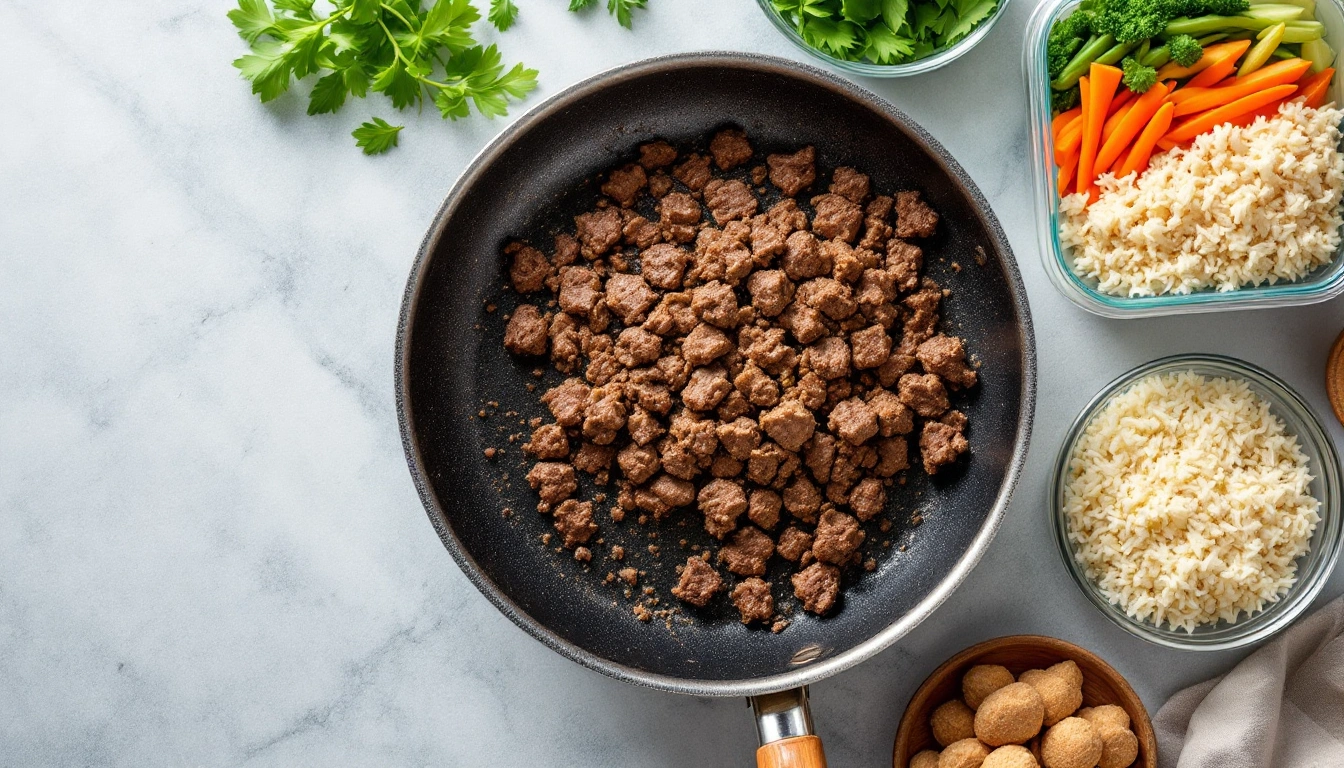
Brown 2-3 lbs of ground beef in a single large pot with just salt, pepper, and diced onion — no sauce yet. Drain the fat, then split the plain cooked beef into four containers before adding anything else. This is the step that makes ground beef meal prep fast: you're not cooking four separate dinners, you're cooking one and finishing it four different ways.
Four ways to finish it:
- Taco filling — taco seasoning, a splash of water, simmered 5 minutes. About 24g protein per serving with toppings.
- Beef and rice skillet — a jarred marinara or a simple tomato sauce, stirred into rice. Around 26g protein.
- Beef and vegetable stir-fry — soy sauce, ginger, a bag of frozen stir-fry vegetables. About 25g protein.
- Chili — kidney beans, canned tomatoes, chili powder, simmered 15 minutes. Roughly 28g protein, and it's the one that freezes best of the four.
I put a full week of ground beef meal prep — these four plus the rest of the week's meals and a grocery list sorted by aisle — into the free 7-Day High-Protein Plan.
Picking the right fat percentage
80/20 ground beef costs less than 90/10 in most stores, but it renders out more fat during cooking, which means slightly fewer usable ounces per pound once it's browned and drained. For meal prep specifically, 90/10 gives more consistent portions since less of the pound disappears as grease. 80/20 is fine if you're draining thoroughly and the price gap matters more.
How long cooked ground beef holds
Cooked ground beef keeps 3-4 days in the fridge — check your own kitchen before eating anything on the edge of that window. It freezes well for up to three months, so cooking a double batch and freezing half in flat bags is a common way to skip a cooking session the following week.
Portioning before you add sauce
Split the plain browned beef into containers by weight or a rough eyeball — about 4 oz cooked per portion — before mixing in taco seasoning, sauce, or anything else. It's much easier to portion evenly when the beef is still plain than after it's coated in sauce and mixed with rice or beans.
The mistake that wastes half the batch
Adding all the seasoning to the entire pot at once, then deciding halfway through the week you're tired of tacos. Season each container's portion separately, right before you eat it or the night before, so one batch of plain beef can become four genuinely different meals instead of one flavor stretched across four days.
Stretching one pound further
A pound of ground beef mixed with a can of beans or a cup of cooked lentils goes from 3-4 servings to 5-6, with the protein total barely changing — beans carry 15g per cup on their own. It's the easiest way to make ground beef meal prep cover more of the week without buying more beef.
Draining fat without losing flavor
Tilting the pan and spooning off excess fat works fine, but running the browned beef through a fine-mesh strainer over a bowl gets more of it out, which matters for how long the meat holds up over four days — extra fat sitting in the container is usually what turns a reheated portion greasy by day three. A minute of extra draining on prep day is worth it for how the last portion of the week tastes.
Freezing in flat portions instead of one block
Spread cooked ground beef in a single layer inside a freezer bag before sealing, pressing out the air. It freezes faster, thaws faster, and breaks apart into usable chunks straight from frozen — useful on a night you forgot to move a portion to the fridge the night before. A block frozen in a round container takes much longer to thaw evenly and often ends up overcooked on the outside by the time the center is ready.
Getting set up for a bigger batch
A large stockpot and a set of freezer-safe containers make the difference between a one-pound batch and a three-pound batch that covers two weeks. A large stockpot and a stack of freezer-safe containers is the one-time buy that makes bigger batches worth doing.